跳过内容
开放导航
_BER2923.jpg _BER2923.jpg

3 Ways Simulation Can Fast-track your Learning Efforts

文章

How can simulation-based training accelerate student learning?

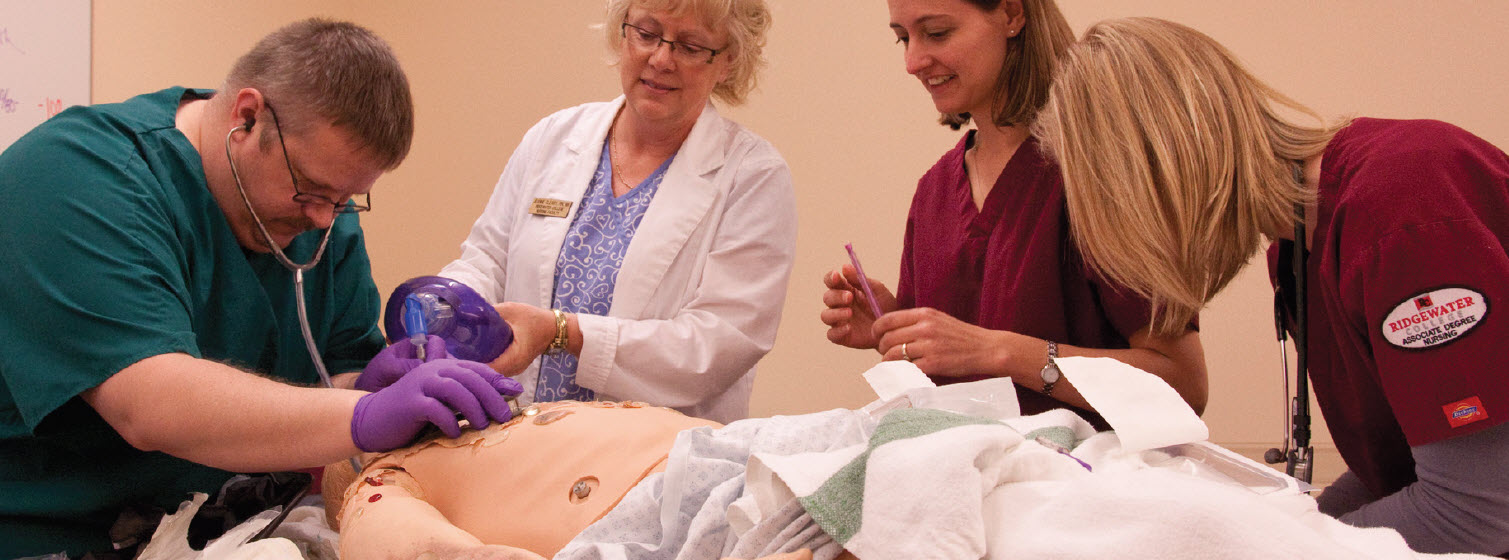
Medicine traditionally relies on a “see one, do one” approach to learning and experience. In this context, didactic learning tends to be limited to the process of imparting knowledge. Simulation-based learning picks up where didactic leaves off. Simulation makes didactic knowledge come alive in a setting designed to mimic real clinical encounters and lifelike experiences where clinicians can refine their individual and team skills well before ever touching a real patient.

以下是有效使用医学模拟可以快速学习学生学习的三种方式:

1.模拟增加参与度

专家们认为,讲师的意图应该是促进他们学习的愿望,并挑战学习者填补他们的经历不足的空白。最终目标?将学习者变成自给自足的问题解决者。1Simulation is ideal for this.

As an educational approach, simulation offers a framework that is both immersive and experiential. Learners who train using simulation experience a higher level of engagement and show greater personal involvement in their training versus those who only experience didactic learning.

仿真是唯一的,因为它适合所有类型的学习方式,因此它成为了这个多模式学习环境。在教室里,学生远离八个小时的时间要多得多。

Dr. Amar Patel of WakeMed Health & Hospitals

2. Simulation maximizes retention

学习ers and providers who use simulation have higher retention rates versus exclusively didactic forms of learning. “Simulation helps students build mental models, which is so important in healthcare,” according to Jennifer McCarthy, EMT-P, an associate professor at Bergen Community College in Paramus, NJ. “Faculty interact with them to build an effective model, so when students are under stress they can draw on that experience.”

有机会经历经验,使人们开始以不同的方式看待事物的时刻。

Drexel大学医学院急诊医学教授Sharon Griswold-Thenoson博士

研究证实了动手实践对保持技能的重要性。4In a 2010 study, 100% of graduate nurses said that simulation facilitated learning through experience without risk to the patient, and gave them confidence in emergency situations.5

在基于模拟的产科临床医生的团队培训中,有30%的参与者表示,他们的团队的整体表现显示出显着改善。此外,有90%的人同意他们对关键事件的反应得到了改善。6

A longitudinal study of internal medicine residents found that Advanced Cardiac Life Support (ACLS) skills acquired via a simulation-based education program did not decay significantly over a 14-month period. These findings are in sharp contrast with baseline data indicating that graduating residents without simulator training showed 17% poorer performance on average, despite three years of patient care and completion of two ACLS courses.7

100%

Graduate Nurses now confident in emergencies

90%

OB Clinicians responded better to critical events

17%

Experienced residents without simulation training performed 17% poorer in ACLS

3.模拟确保学习被转移到工作

学习ers and providers who use simulation, especially in situ, are associated with a higher rate of skill application at the bedside.

有证据表明,在医疗模拟实验室环境中获得的临床技能直接转移到改进的患者护理习惯和更好的患者预后。例如,发现模拟优于传统的临床教育,可以获得广泛的医疗技能,包括:先进的心脏生命支持,腹腔镜手术,心脏听觉,血液透析导管插入,胸腔清除和中央静脉导管插入。8

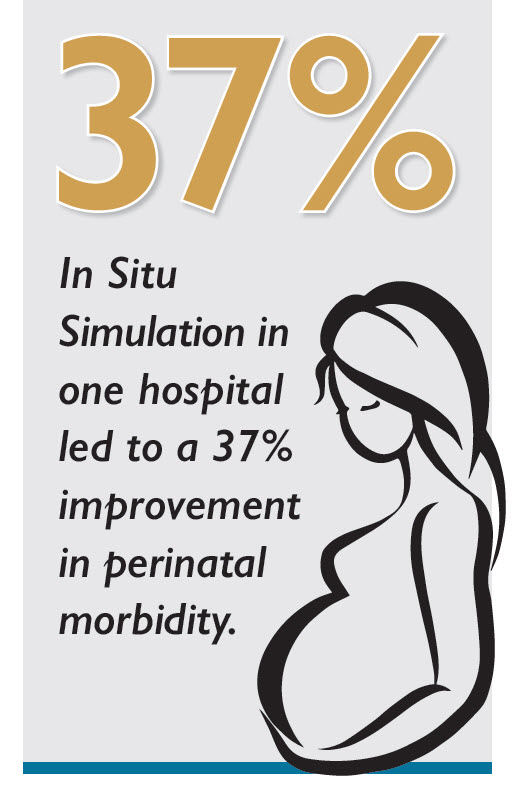
A recent study found that in situ simulation as an interdisciplinary team training methodology reduced perinatal morbidity. The findings indicated that a process shift occurred in the hospital being trained with in situ simulation, resulting in an improvement of 37% in perinatal morbidity.9

Dr. Robert Anderson, assistant professor at the Northern Ontario School of Medicine, sees simulation as having a tremendous impact on learning outcomes. “You can challenge the way students look at things and make mistakes in essentially a consequence-free environment.”10

37%

Summary

“模拟有效吗?您敢打赌它有效。”南加州大学USC创意技术学院医学总监Thomas Talbot博士说。“这是一种现实生活中的游戏版本,有人可以取得良好的结果或不良的结果。我们让用户在安全的环境中拥有这种经验,因此他们可以自由犯错并向他们学习。”

诸如临床站点竞争,高质量临床经验的机会,重新关注患者安全以及不断发展的偿还策略等因素,已将医疗模拟从“尼斯到”重新播放到有效的医学教育和有效的医学教育和训练。如果您今天不使用模拟,也许是时候探索模拟如何添加培训工作了。

References

1. Bruner, Jerome S. 1966. Toward a Theory of Instruction. Cambridge MA: Harvard University Press, pp. 49–53
2. McGaghie,W。C.,Issenberg,S。B.,Petrusa,E。R.和Scalese,R。J.(2010)。基于模拟的医学教育研究的批判性综述:2003- 2009年。医学教育,44(1),50-63。
3. McCoy,L.,Pettit,R.K.,Lewis,J.H.,Allgood,J.A.,Bay,C。,&Schwartz,F。N.(2016)。在虚拟患者模拟过程中评估医学生的参与度:一项顺序混合方法研究。BMC医学教育,16(1),1。
4. Oermann, M. H., Kardong-Edgren, S. E., & Odom-Maryon, T. (2011). Effects of monthly practice on nursing students’ CPR psychomotor skill performance. Resuscitation, 82(4), 447-453.
5. Ackermann, A. D., Kenny, G., & Walker, C. (2007). Simulator programs for new nurses’ orientation: A retention strategy. Journal for Nurses in Professional Development, 23(3), 136-139.
6. Gardner, R., Walzer, T. B., Simon, R., & Raemer, D. B. (2008). Obstetric simulation as a risk control strategy: course design and evaluation. Simulation in Healthcare, 3(2), 119-127.
7. Wayne, D. B., Siddall, V. J., Butter, J., Fudala, M. J., Wade, L. D., Feinglass, J., & McGaghie, W. C. (2006). A longitudinal study of internal medicine residents’ retention of advanced cardiac life support skills. Academic Medicine, 81(10), S9-S12.
8. McGaghie, W. C., Issenberg, S. B., Petrusa, E. R., & Scalese, R. J. (2010). A critical review of simulation-based medical education research: 2003–2009. Medical education, 44(1), 50-63.
9. Riley,W.,Davis,S.,Miller,K.,Hansen,H.,Sainfort,F。,Sweet,R。Dictactic和Migulation非技术技能团队培训,以改善社区医院的围产期患者结果。《质量与患者安全联合委员会杂志》,第37卷,第8期,2011年8月,第357-364页(8)。
10. Cohen,E。R.,Feinglass,J.,Barsuk,J.H.,Barnard,C.,O’Donnell,A.基于医疗重症监护病房的居民基于模拟的教育后,与导管相关的血液感染减少了成本。医疗保健中的模拟,5(2),98-102。

Baidu