Mejorar la competencia cultural con simulación
Opciones de tono de pielHumanity: 6+ billion population growth in the last 200 years
Familiarize and Prepare with Visual
Representation in Simulation Training
The world is shrinking.
Technology and greater human movement have reduced past divides. Communities across the globe are growing and becoming more interconnected. Healthcare providers must be prepared to treat patients of all backgrounds and provide responsible care.
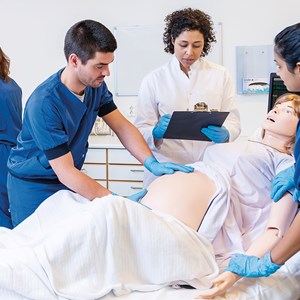
Long celebrated, simulation training enables participants to assess, diagnose, and treat a patient from beginning to end. By adding exercises with simulators of different skin tones, students gain a naturalness with treating patients who look differently in any circumstance.
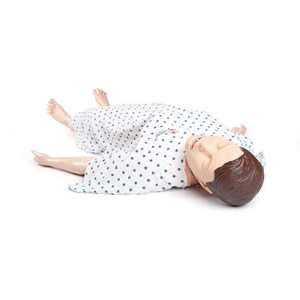
Product solutions with skin tone options
Reduce unease in the unfamiliar
Incorporate Real-World Examples into Simulations
To better prepare for respectful care, it’s important to organize simulation scenarios around patients based on the people in the community. Take care to focus on including all members, particularly ones in isolated neighborhoods or not belonging to the mainstream.
Are you interested in more ways to maximize simulation training to better prepare students for their future careers? Fill out the form below and someone from Laerdal Support will get in touch.
Racial and Ethnic Disparities
Multiple studies have shown that pain is often undertreated in Black expectant and new mothers. Explore that phenomenon through a simulated experience: A 34-year old Black woman returns to the hospital 3-weeks postpartum after a high-risk pregnancy battling a clotting disorder and high blood pressure. She had a C-section birth and is suffering a painful hematoma at her incision and has also been suffering headaches, blurred vision, and swelling legs.

Gender Disparities
Heart disease is the leading cause of death for women in the U.S. While male symptoms are more well-known, women can sometimes exhibit no symptoms at all. Simulate a middle-aged White woman reporting pain in the jaw and throat as well as nausea.

Socioeconomic Disparities
Often, Socioeconomic status (SES) is interpreted through appearances alone. One way to shine a light on the learners’ implicit biases is to run the same simulation two times – once with a low-SES homeless man and once with a high-SES businessman.

Pre-programmed Scenarios
Find hundreds of clinical scenarios available on Laerdal Scenario Cloud
Expand your curriculum with a selection of high-quality, expert-validated scenarios from Laerdal and partners. All available for your entire organization - with just one single license.Learn More
Download E-book
Interested in more ways simulation can help to reduce implicit bias and mitigate risk to patients of diverse backgrounds? In our new E-Book, we share more examples of simulation scenarios that can bring an awareness to a patient’s cultural characteristics – and other helpful planning tools.