

改善患者护理
基于模拟的教育Globally, the World Health Organization estimates that medical errors result in 2.4 million deaths, every year. Harm from medical care poses a substantial burden in terms of morbidity and mortality on people around the world. It is our vision that no one should die or be disabled unnecessarily during birth or from sudden illness, trauma, or medical errors.
在接受医疗保健时受到伤害
年度患者安全事件
由于医疗错误而导致的年费
为什么要改善患者安全?

There is a 1 in 300 chance of a patient being harmed in a hospital.

1 in 4 patients are harmed while receiving primary and ambulatory healthcare.

每100名患者中,有14例与医疗保健相关的感染发生。

More than 40 million adverse events occur to patients during hospitalization.
Getting the opportunity to practice

One of the biggest challenges for improving patient safety is the opportunity to practice. Clinical placement opportunities, especially within nurse education, are becoming increasingly limited as the demand for healthcare workers increases due to aging populations.

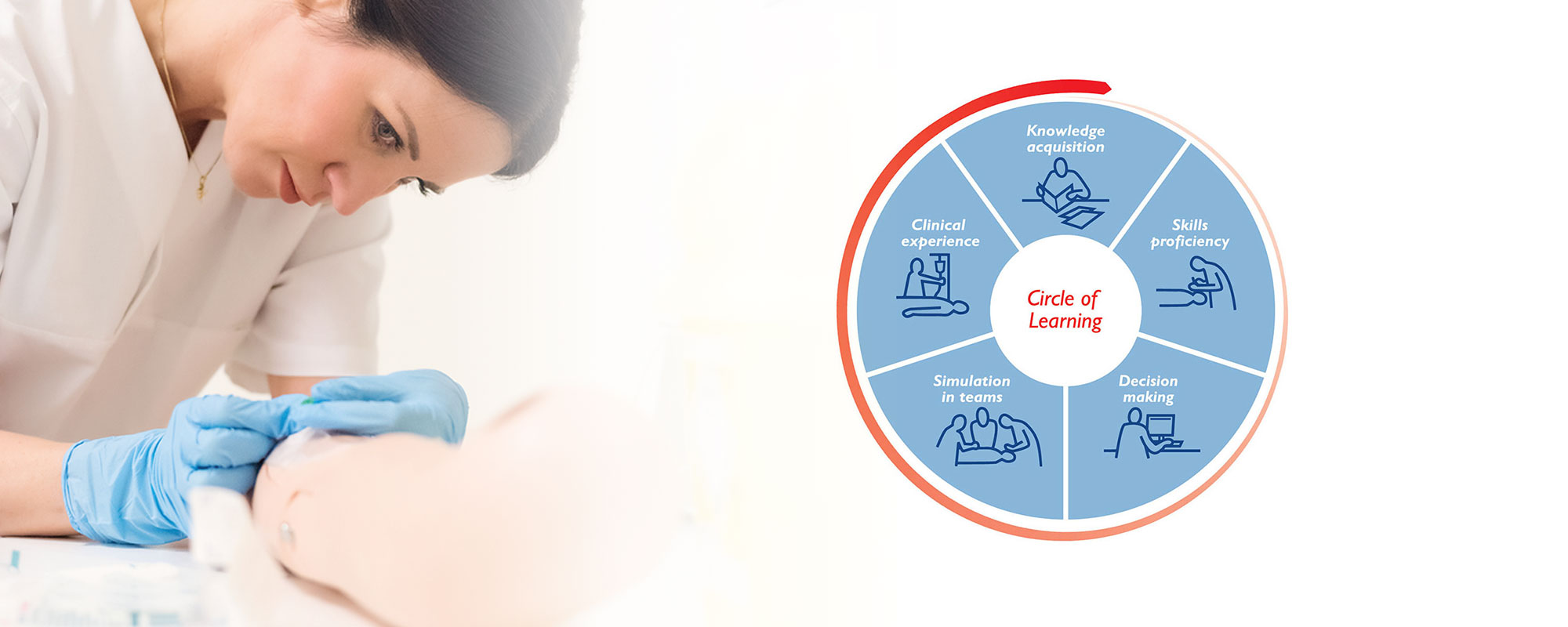
The opportunity for practice is essential, and simulation provides this opportunity without putting patients at risk. Simulation-based training allows students, physicians, nurses, and other healthcare providers to integrate cognitive learning with hands-on skills practice without risk to patients.

减少医疗错误和改善患者安全是患者护理的基本要素,但不是唯一的因素。提供最佳的患者护理还包括发现潜在的安全威胁,促进团队合作和沟通,并确保保持专业能力不仅保持,而且得到改善。
基于模拟的教育
模拟教育的方法在医疗领域已广泛认可,作为增强临床知识,改善团队沟通和教学决策技能的强大工具。模拟是一种教育方法,而不是技术。模拟不仅可以用来教授临床技能,还可以用来教授团队合作和沟通。它还可以用来标准化培训,符合循证指南和目标特定目标。思维方式转变为whatsimulation can do to如何模拟最好用于改善患者护理。
Does simulation work?
医疗培训一直依赖“see one, do one” approach to teaching. Teaching in this context focuses on imparting knowledge. Simulation-based training makes that knowledge come alive—alive in a setting designed to imitate real clinical encounters and lifelike experiences where clinicians can refine their individual and team skills without posing risk to real patients.

影响力的创新



Key research

