以下都是保监会的真实故事ulated widely in the media. Both involved emergencies in the first moments of a child’s life…
In the first story, the attending staff had trained aggressively to identify and manage labor and delivery emergencies. Upon diagnosing the immediacy of the risk factors present, the staff carried out a well-planned and rehearsed effort that avoided harm to the child. To the joy of the family, the birth was a resounding success.
在附近的设施中,发生了类似的紧急情况,但是另一个故事正在播放。如何诊断和解决情况导致紧急干预措施对孩子致命,并向母亲颁发了1,020万美元的奖励。
每年在全球范围内,估计有814,000例新生儿死亡与全学期婴儿中的产前缺氧事件(即“出生窒息”)有关。1在那些生存的人中,许多人遭受神经系统障碍。2
当婴儿出生时,他或她应该在“金分钟”内开始呼吸,这是他们在子宫外的头60秒。大多数婴儿的确开始呼吸。但是,全球1000万婴儿将需要帮助。3Approximately 10% of newborns who do not breathe on their own will respond to drying, warming, clearing of the airways, and stimulation. And, 1% of non-breathing babies will need advanced methods of resuscitation, such as chest compressions and medication.4
对家庭来说,1%的意思是一切。这1%的人妨碍了孩子的生存,即使他或她确实生存,也会增加脑部损伤的机会。相信她将获得最佳护理的母亲期望她的提供者为1%的风险做好了充分的准备。
一分钟:太短了,无法做什么?
“金分钟”是指婴儿一生的前60秒。在这些有限的秒内,婴儿应开始对自己的呼吸,或者必须开始干预措施。
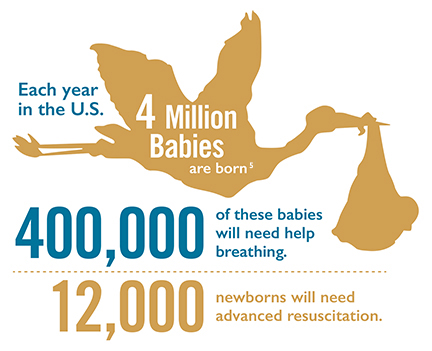
美国每年大约有400万婴儿出生。6It is estimated that 400,000 of these babies will need help breathing and/or positive-pressure ventilations to successfully transition to extra-uterine life. And, as many as 12,000 infants will need advanced resuscitation with chest compressions and cardiac medications.7
在每种情况下,为治疗婴儿采取的步骤必须精确,及时。


