以下是媒体广泛流传的真实故事。两者都涉及到孩子一生的第一时刻的紧急情况……
在第一个故事中,主持人进行了积极的培训,以识别和管理劳动力和分娩紧急情况。在诊断出存在的危险因素的即时性后,工作人员进行了精心计划和排练的努力,避免了对孩子的伤害。令家庭的喜悦,出生是巨大的成功。
At a nearby facility a similar emergency occurred, but a different story was playing out. How the circumstances were diagnosed and addressed led to emergency interventions that proved fatal to the child and resulted in a $10.2 million award to the mother.
Worldwide each year, an estimated 814,000 neonatal deaths are related to intrapartum hypoxic events (i.e. “birth asphyxia”) in full-term infants.1Of those that survive, many are left with neurological impairments.2
When a baby is born, he or she should begin breathing within the “Golden Minute,” their first 60 seconds outside of the womb. Most babies do begin breathing on their own. 10 million babies worldwide, however, will need assistance.3大约有10%的新生儿自行呼吸将对干燥,变暖,清除气道和刺激作出反应。而且,1%的非呼吸婴儿将需要先进的复苏方法,例如胸部压缩和药物。4
To the family, 1% means everything. That 1% stands in the way of the child’s survival, and increases the chance of brain damage even if he or she does survive. The mother who trusts that she will receive the best possible care expects that her providers have been fully prepared for the 1% risk.
One Minute: Too Short to Do Anything?
The “Golden Minute” refers to the first 60 seconds of an infant’s life. Within these limited seconds, the infant should begin breathing on his or her own, or interventions must be started.
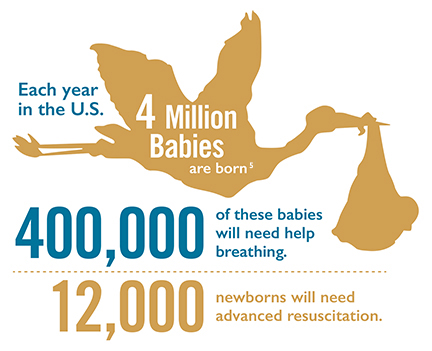
Approximately 4,000,000 babies are born each year in the United States.6据估计,这些婴儿中有400,000名将需要帮助呼吸和/或阳性通风才能成功过渡到外牙外寿命。而且,多达12,000名婴儿将需要采用胸部压缩和心脏药物的高级复苏。7
In each case,steps taken to treat an infant must be precise and timely.


